
Alberto Núñez Feijóo: Personality, Leadership and the Peacemaker’s Dilemma


From the perspective of personality psychology in leadership, the case of the Spanish leader Alberto Núñez Feijóo is particularly compelling.
The most sustainable form of politics is built from the center. Not ideological centrism for its own sake, but psychological centrism — the ability to listen, to weigh perspectives, and to prioritize dialogue over noise.
Recently, a commentator put it succinctly:
“Being moderate is not the same as being weak.”
That distinction brings to mind the Alberto Núñez Feijóo.
The Early Promise: When Coherence Seemed Possible
Núñez Feijóo is a Spanish center-right political leader and former long-serving President of Galicia.
His inaugural speech as president of the Partido Popular signaled a shift in tone in Spanish politics. He spoke of adult politics. Of avoiding insults.
Of restoring institutional gravitas.
He suggested the possibility of a more constructive political phase — less reactive testosterone, more executive maturity.
Coming from Galicia, he carried the reputation of a prudent manager, a negotiator, a builder of consensus. In personality psychology terms, these traits align closely with the structure of the Enneagram Type 9 — the Peacemaker.
The Peacemaker integrates. Mediates. De-escalates. In complex systems, such a profile can be invaluable.
When Strength Becomes Vulnerability
Every strong trait has a light side and a shadow side.
The very quality that makes a leader effective in one environment can become fragile in another.
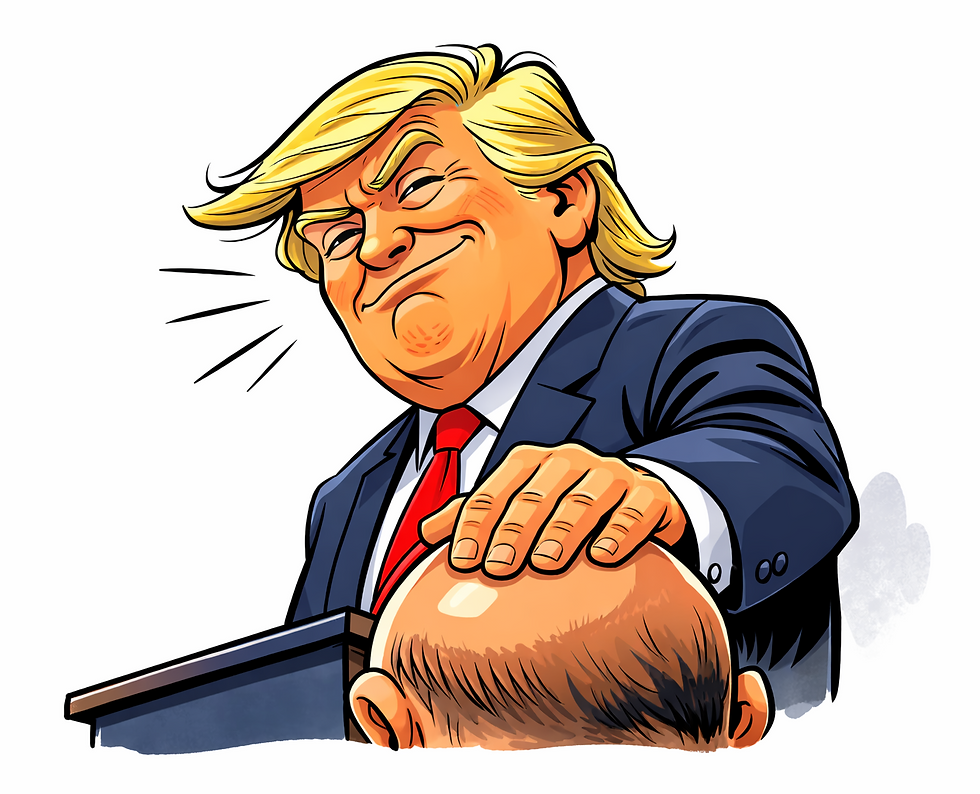
Feijóo’s natural inclination toward consensus — an undeniable asset in many contexts — encountered a very different ecosystem at the national level: louder, more populist, more polarized, and at times dominated by playground-style power dynamics.
What happens to the Peacemaker in such an environment?
A deep internal mandate activates: preserve harmony. Keep everyone aligned. Avoid rupture.
The discomfort with overt conflict is not merely intellectual; it is structural. Under sustained confrontation, the Peacemaker’s energy can shift from asserting direction to managing tension. From leading forward to holding the system together.
Over time, this erodes confidence. It weakens perceived authority. It blurs clarity of stance.
The Peacemaker under pressure does not explode. He dissolves.
Today he appears clearly removed from his psychological center of moderation and dialogue. We see a leader adopting a confrontational style that does not align with his natural disposition — one that feels constructed rather than authentic. In trying not to disappoint others, he ultimately blurred himself.
He risks becoming a shadow of what he once was — and of what he might have been with greater self-awareness.
With deeper insight into his own personality dynamics, he might have seen the pattern emerging earlier. And he would have been better prepared.
The Stone Many Leaders Trip Over
This dynamic extends far beyond politics. Many leaders do not fail because they lack competence.
They fail because they lack self-knowledge.
They do not recognize when they are adjusting strategically and when they are adapting anxiously. They do not see when moderation shifts into avoidance. They do not detect how pressure activates their most vulnerable patterns.
In a hyperpolarized world amplified by social media, psychological self-awareness is not a luxury. It is strategic preparation.
Not to change who you are, but to understand precisely who you become under pressure.
Self-knowledge is not introspective indulgence.
It is a competitive advantage.


Comments